
Roots and Routes: A Journey Through OMCA
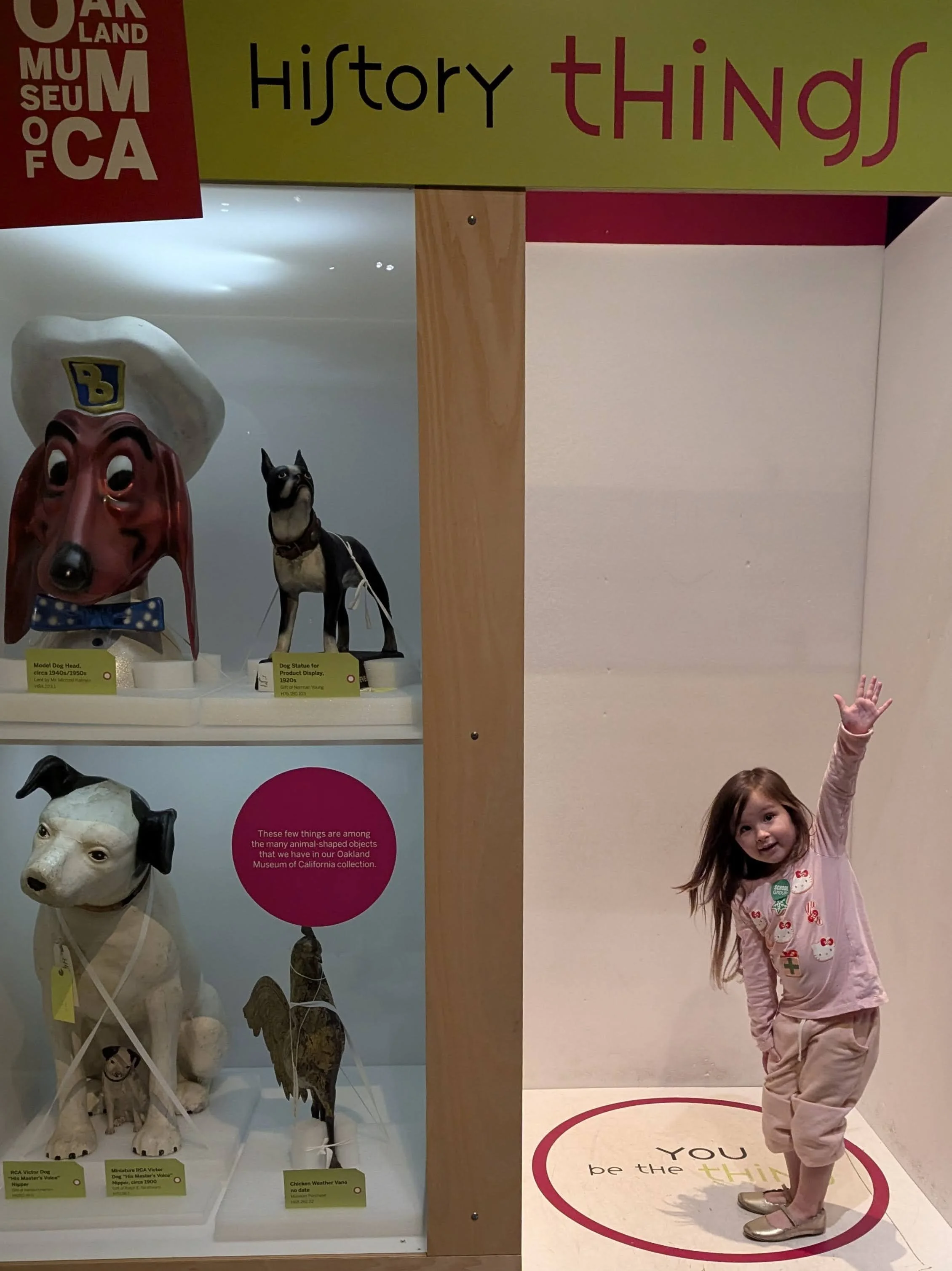
“You be the thing!”
This February, our curious explorers took a trip across the hills to the Oakland Museum of California (OMCA). While many think of museums as places for "quiet voices," OMCA offered our toddlers a vibrant, hands-on world where history and nature collide.
Honoring Native Lands and Stories
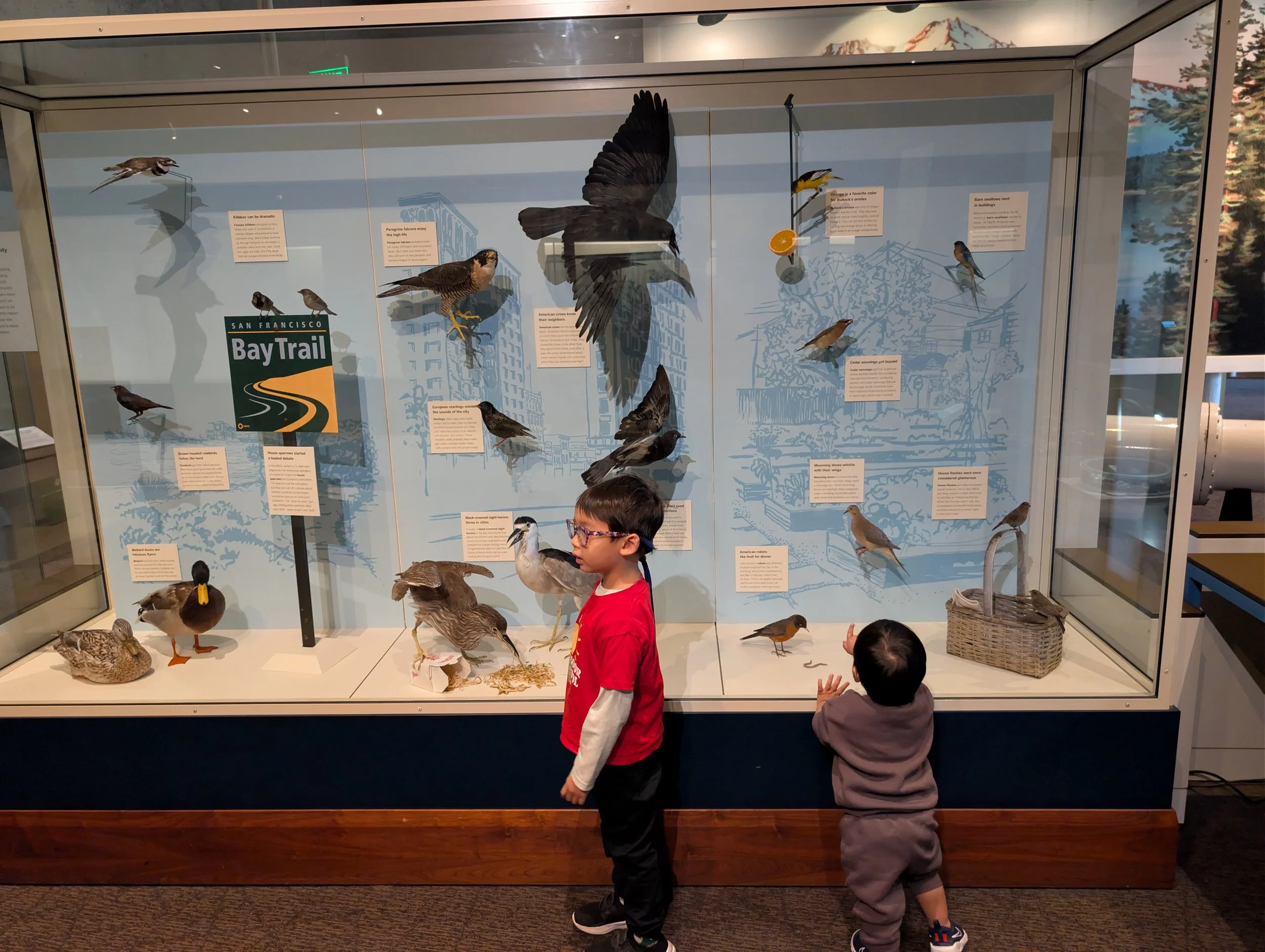
Birds for miles and miles, literally!
Our visit centered on the concept of home—not just our houses, but the land we stand on. We spent time learning about Native lands, specifically the Indigenous peoples of California who have stewarded this area for thousands of years.
Understanding that the East Bay has a deep history before "city life" began is a vital part of our curriculum. The children explored how Indigenous wisdom and environmental care are woven together, helping them see that "taking care of the earth" is a tradition that spans generations.
Nature Play and the Power of Maps
The highlight for many was the Nature Playspace, where "learning by doing" took center stage. The kids engaged in sensory play that mimicked the local California landscape. We also dove into using maps in everyday life, helping the children visualize where they live in relation to the mountains and the Bay. By "mapping" our world, toddlers begin to develop spatial awareness and a sense of belonging to their environment.
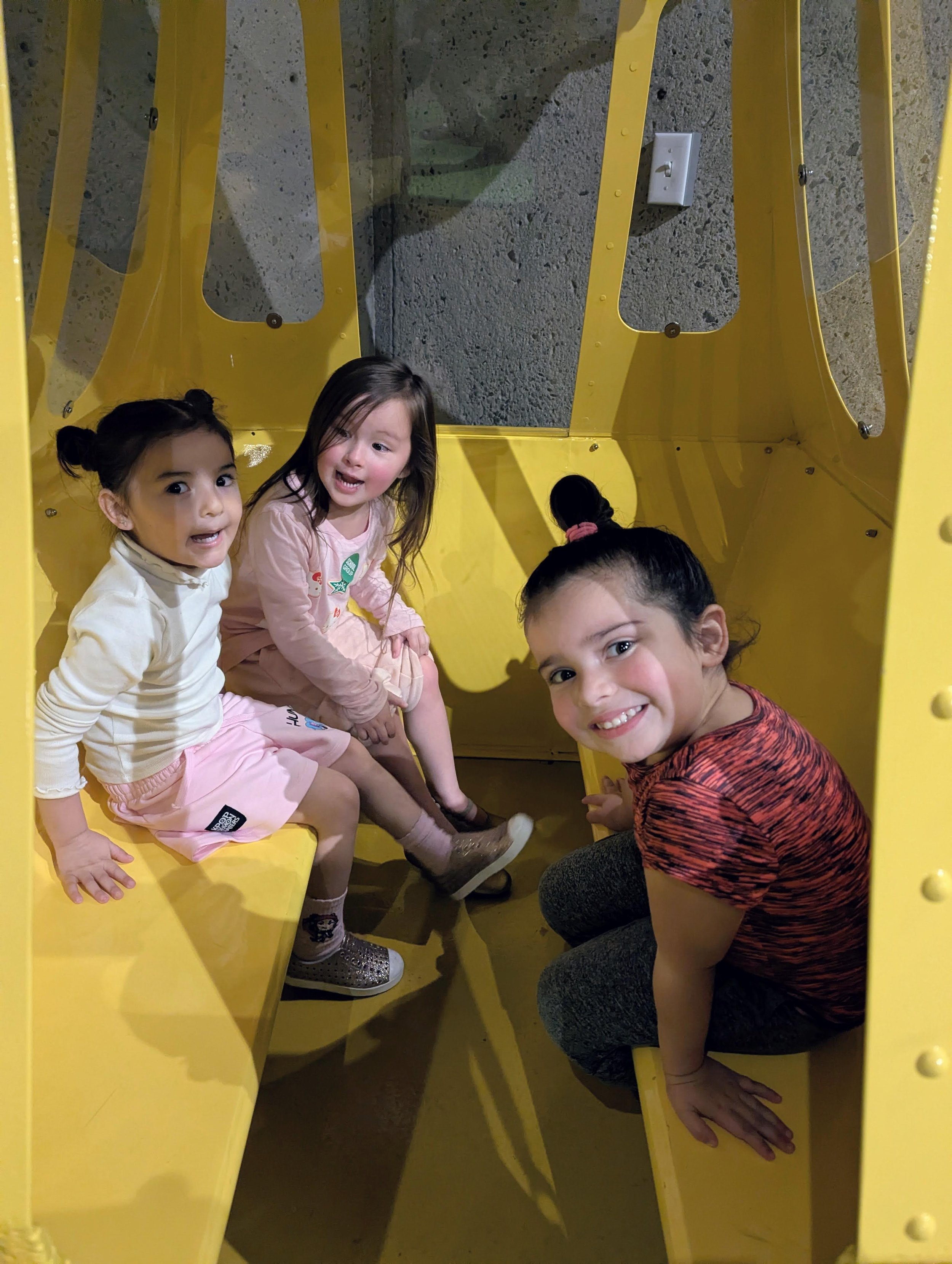
Imaginary trips in our own personal tram car are the best! Where we headed, guys???
The Science of Cultural & Environmental Connection
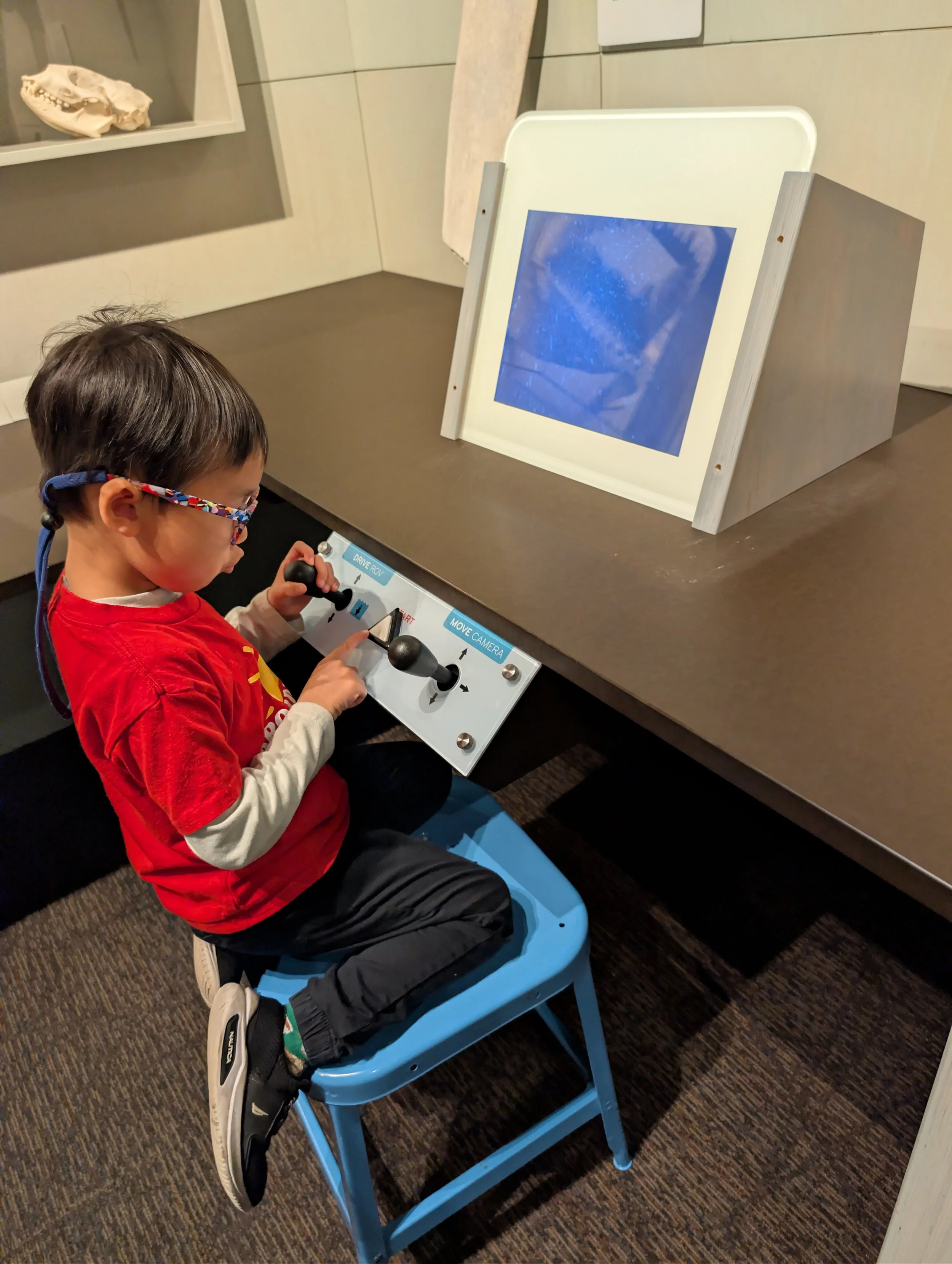
Joysticks = advanced hand-eye coordination.
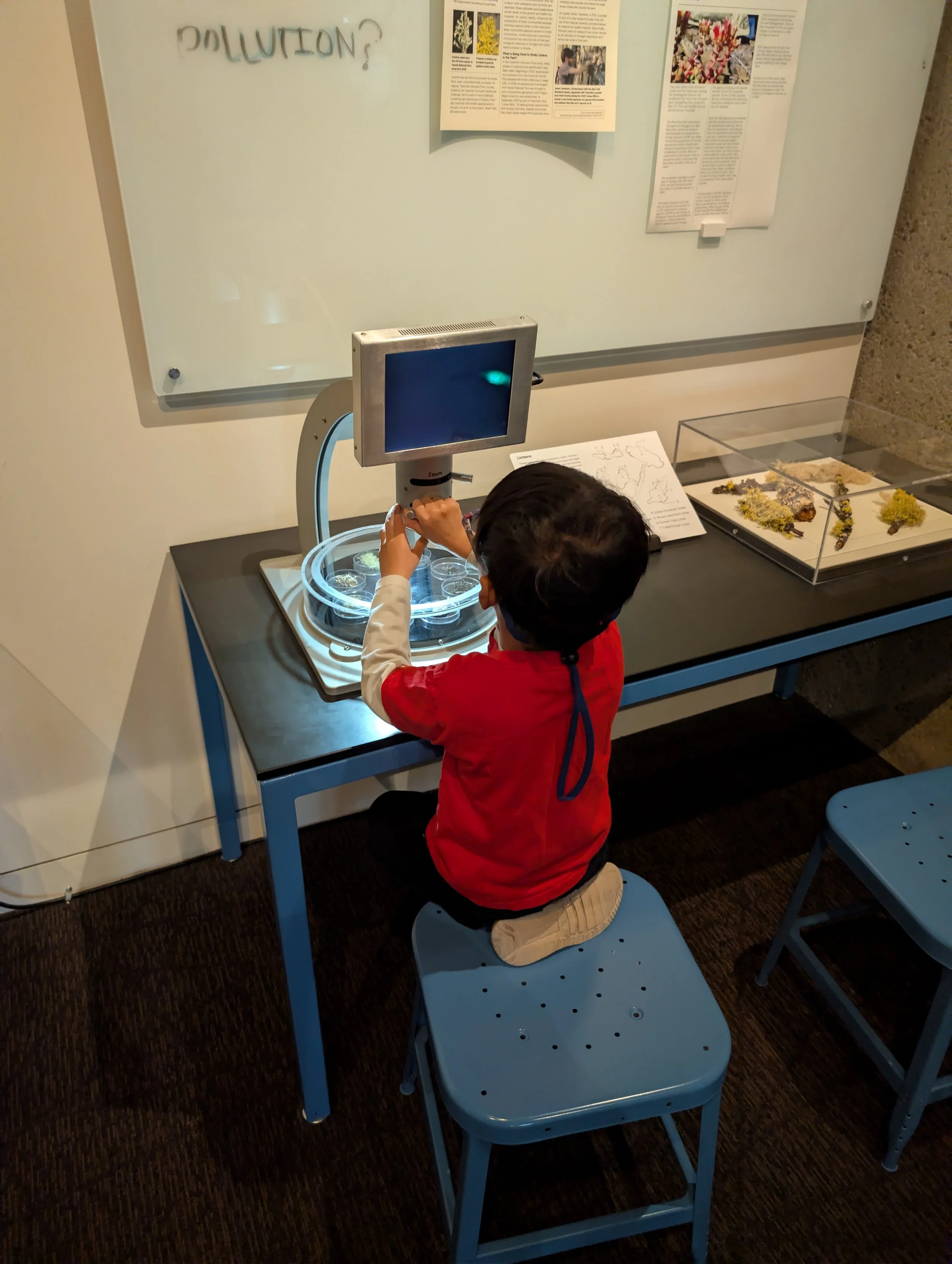
Checking out textures like lichen under a high-powered microscope - scientists in the making!
Why do we introduce historical and cultural themes so early? It turns out that understanding "Place" is a key developmental milestone.
A research article in the Journal of Early Childhood Research emphasizes that "place-based education"—learning about the local history, culture, and ecology of one's own backyard—fosters a stronger sense of identity and community responsibility in young children. When kids learn the names of the original stewards of the land, they develop a more profound, respectful connection to the Earth.
Earth Week Connection: Become a Community Scientist
In the spirit of our OMCA trip, Earth Week is a perfect time to practice being a "Community Scientist" by observing the world exactly where you are:
Map Your Backyard: Grab a piece of paper and help your child draw a simple map of your yard or local park. Where are the "wild" spots? Where do the bugs live?
Learn the History: Take a moment to look up the Indigenous history of your specific neighborhood. Acknowledging the original stewards of the land is a powerful way to celebrate Earth Week.
Practice Observation: Use tools like a magnifying glass to look at the "tiny worlds" in the grass, just like we did in the OMCA Nature Playspace.
Support Local Conservation: Check out the HARD Foundation for local trails where you can see the native California landscape in person.
Close the Loop: Help keep our native lands clean by bringing your hard-to-recycle items to our TerraCycle collection bins at school!