
Whisking Up Wonder: Adventures in Our Cooking Station
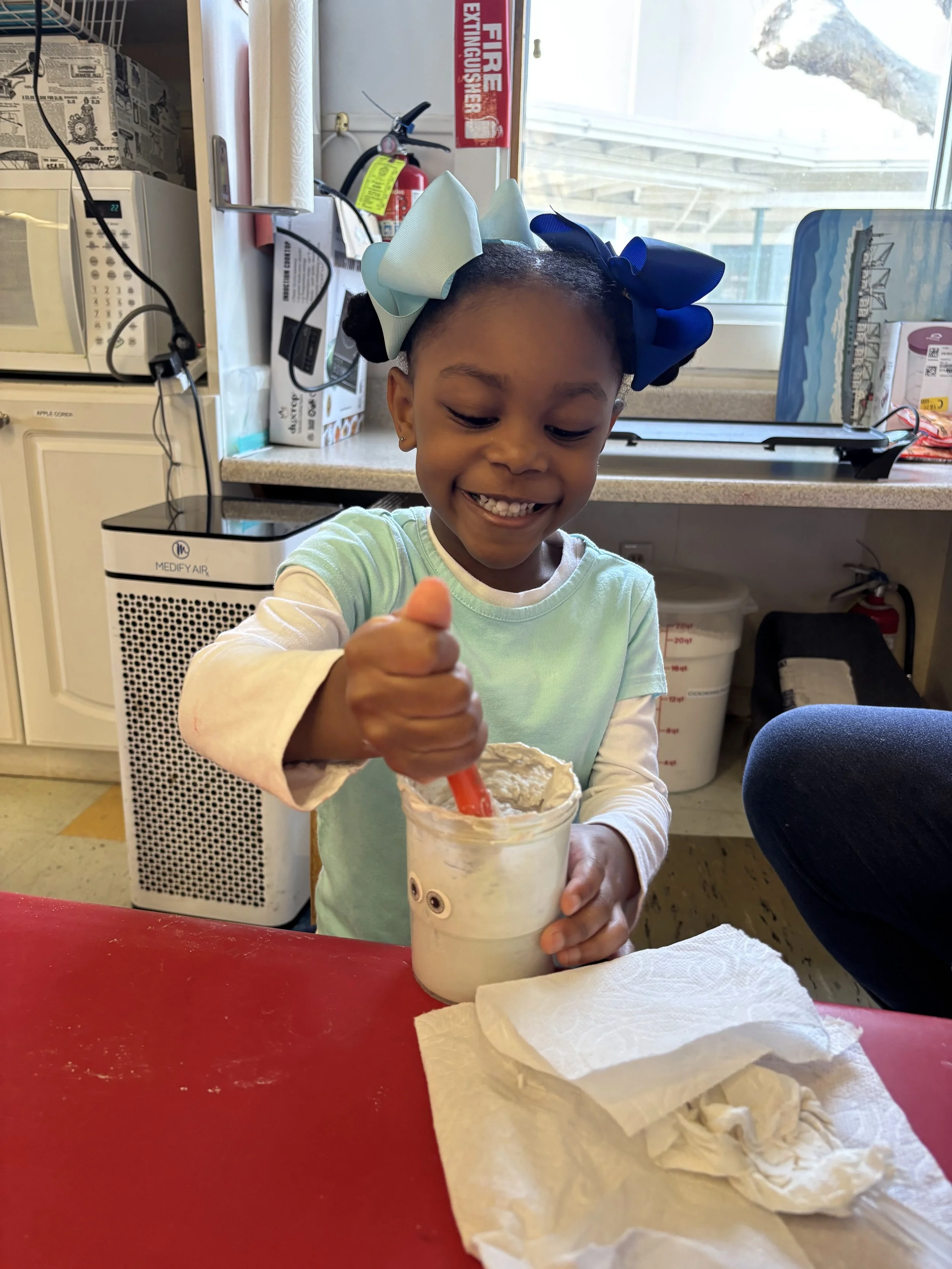
Just keep mixing, just keep mixing…
If you follow the scent of fresh rosemary and warm biscuits, you’ll find yourself at one of the most beloved spots in our classroom: The Cooking Station. Here, we don’t just make snacks; we explore the world, one "delectable" masterpiece at a time!
A Feast for the Senses (And the Soul!)
Cooking is the ultimate multi-sensory experience. Our little chefs are constantly busy:
The Savory: Mastering the Instant Pot for a hearty brisket stew.
The Sweet: Peeling and coring apples harvested right from our own backyards.
The Science: Mixing up "Oobleck" (don't eat that gold paint!) or kneading pasta dough from scratch.
The Rainbow: Threading colorful fruit skewers and spreading cream cheese on morning bagels.
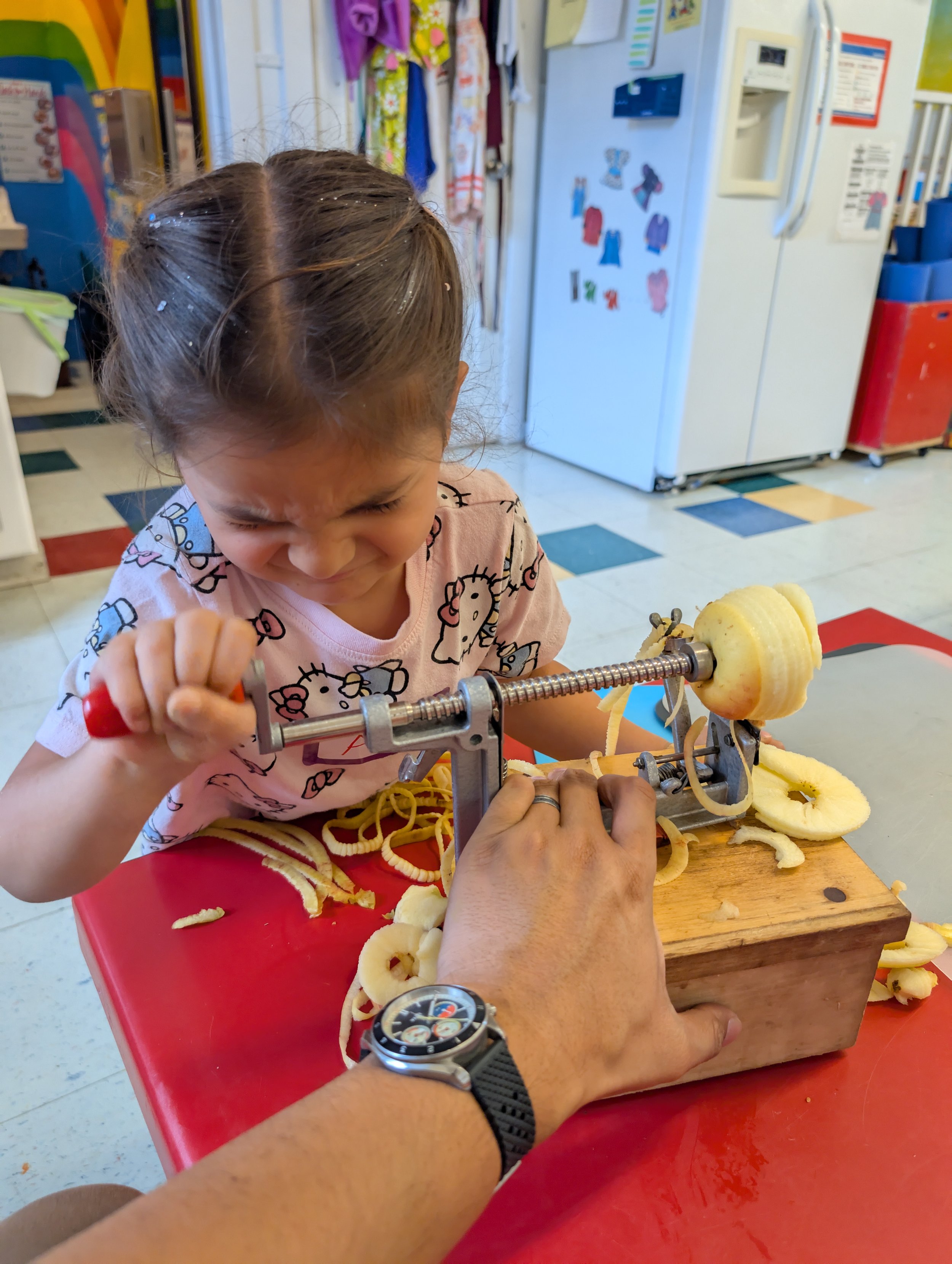
You’ve got this! Look at those muscles working!
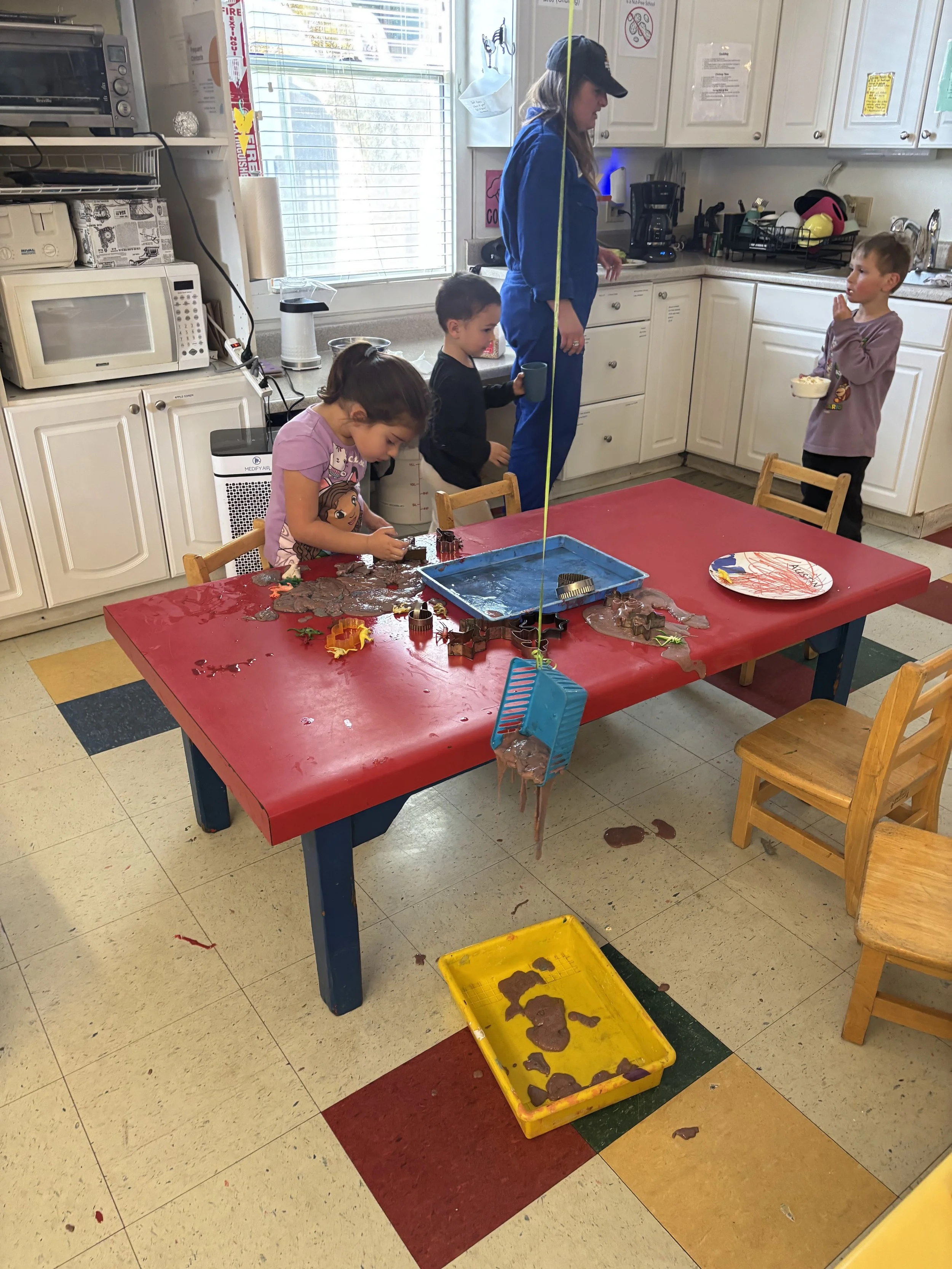
Land Before Time-esque playscape creation with Ms. Kacia - suspending a basket from the ceiling and letting brown slime drip into a tray? Wish I were there!
It is often messy, always hands-on, and a beautiful way to celebrate the diverse cultures represented by our friends in the classroom. Whether we are making pizza or traditional stews, we are tasting the stories of our community.
The "Farm-to-Table" Connection
Some of our best days are "planter-to-plate." There is a special kind of magic when a child harvests a carrot they helped grow, washes it, and prepares it for a meal. This connection to the earth is a cornerstone of our Earth Week values.
Why Cooking Together Matters
Why do we put so much effort into these kitchen projects? Because kids who cook are kids who eat!
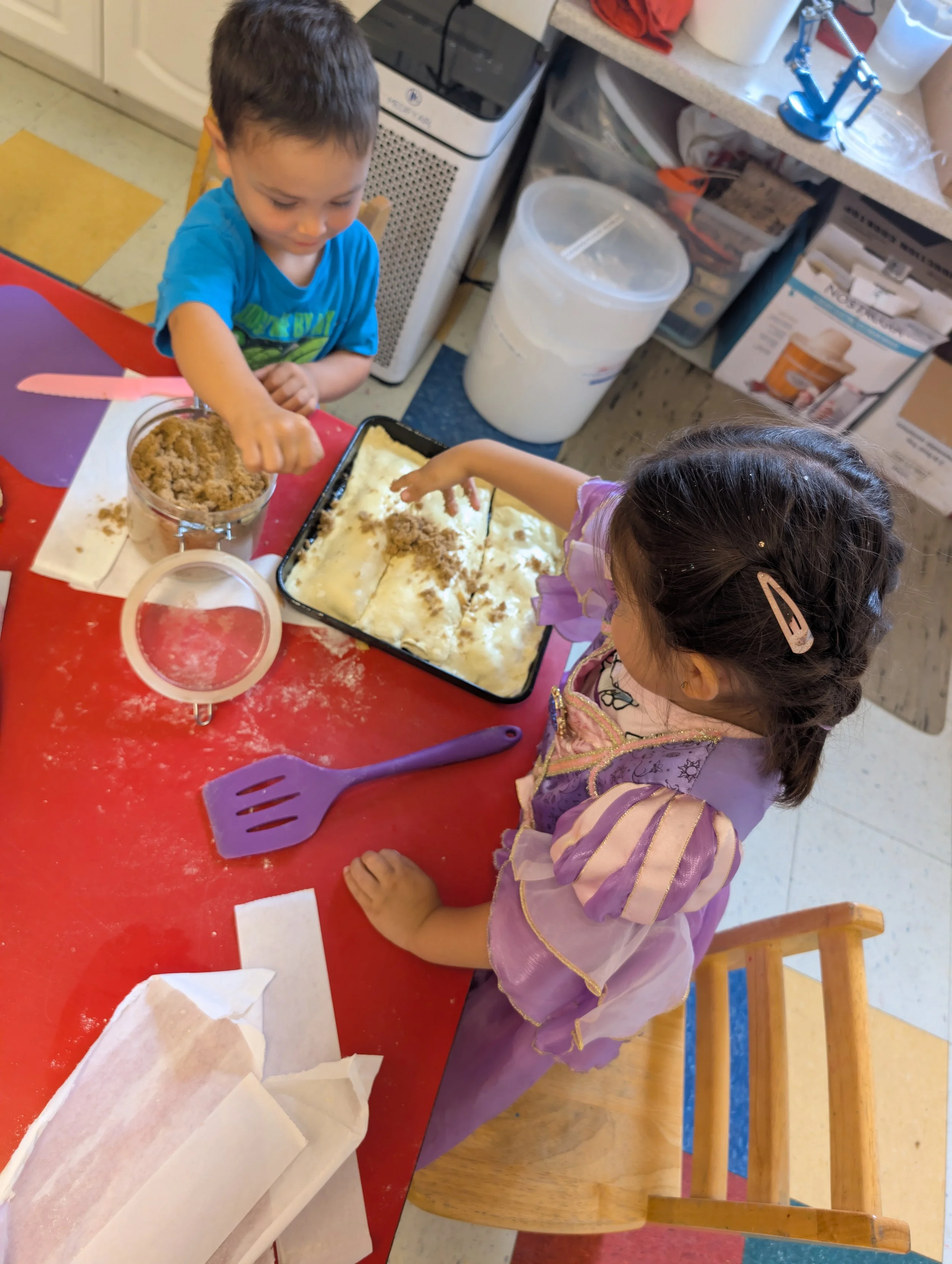
Brown sugar? Yes, please!
Healthy Habits: Research from the Academy of Nutrition and Dietetics shows that involving children in food preparation increases their willingness to try new, healthy foods.
Sustainability & Waste: According to a study in Public Health Nutrition, children who garden and cook develop a deeper understanding of food systems, making them more likely to practice sustainable habits like composting and reducing food waste.
Earth Week Connection: The "Habitat Hero" (Sustainable Eating)
In the spirit of our cooking station, here is how you can support our local ecosystem through food this week:
Support Local Farms: Visit a local farmers market to pick up seasonal produce. It supports local businesses and reduces the carbon footprint of your meal.
The "Worm" Side of Cooking: At school, our leftovers don't go in the trash—they get composted or fed to our thriving worm bin! Start a small compost bucket at home to show your child how food scraps turn back into "black gold" soil.
Neighborly Harvest: Use what’s already growing! If you have a generous neighbor with an overactive lemon tree or rosemary bush, involve your child in the "harvest" and preparation.
Diverse Palates: Try one new recipe this week from a culture different than your own. It’s a delicious way to celebrate the global "Earth" family.
Close the Loop: Bring your empty snack pouches and food packaging to our TerraCycle bins at school to ensure nothing from our kitchen ends up in the ocean!
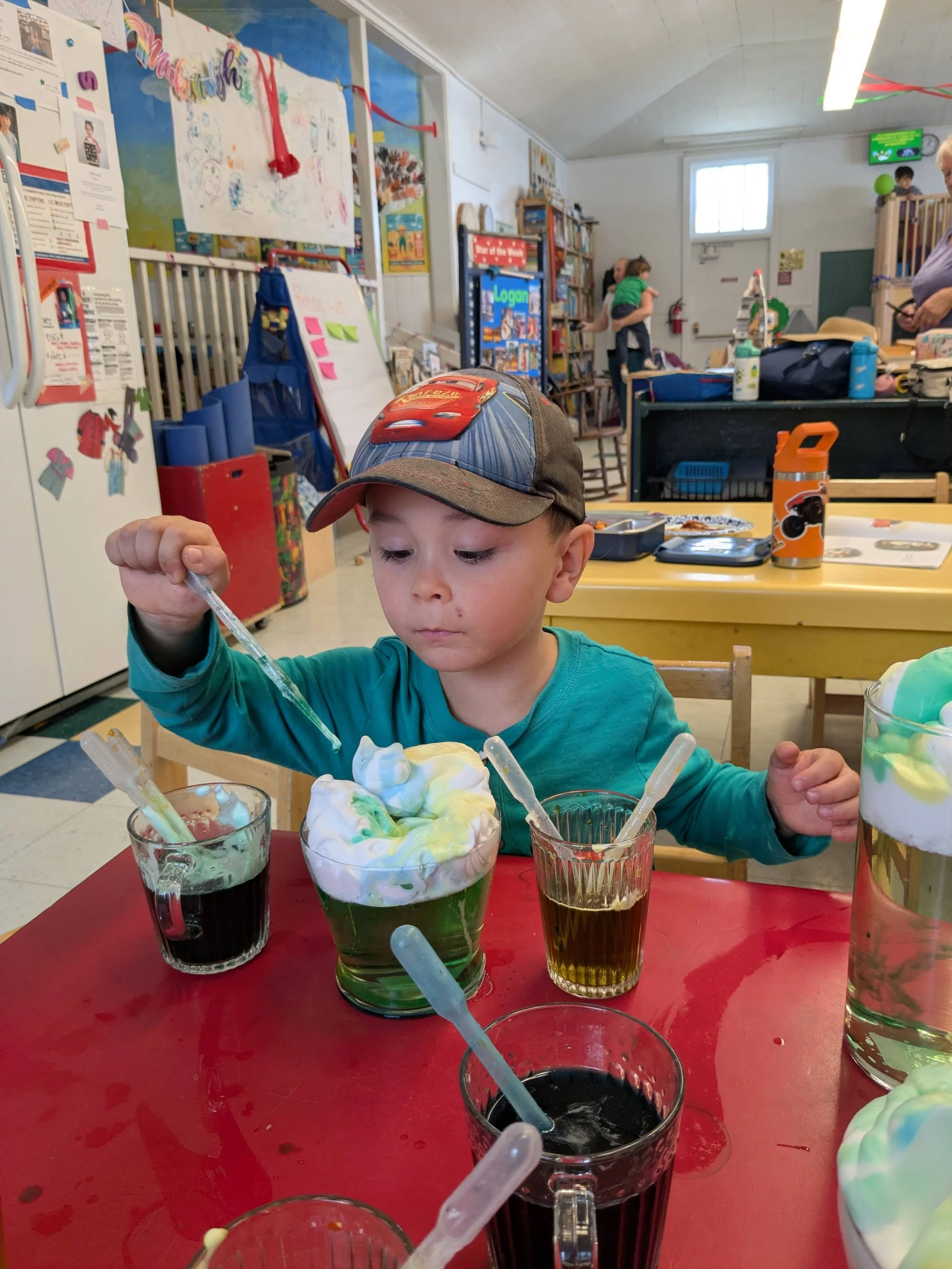
Making it rain! With shaving cream and colorful water!